Dopamine
Reward prediction error signal in vertebrate brains. Can drive compulsive behavior even in the absence of actual rewards, because it's a signal for expectation of reward. Direct chemical stimulation of dopamine release (alcohol, cocaine, etc) directly drives the compulsive behavior in such cases.
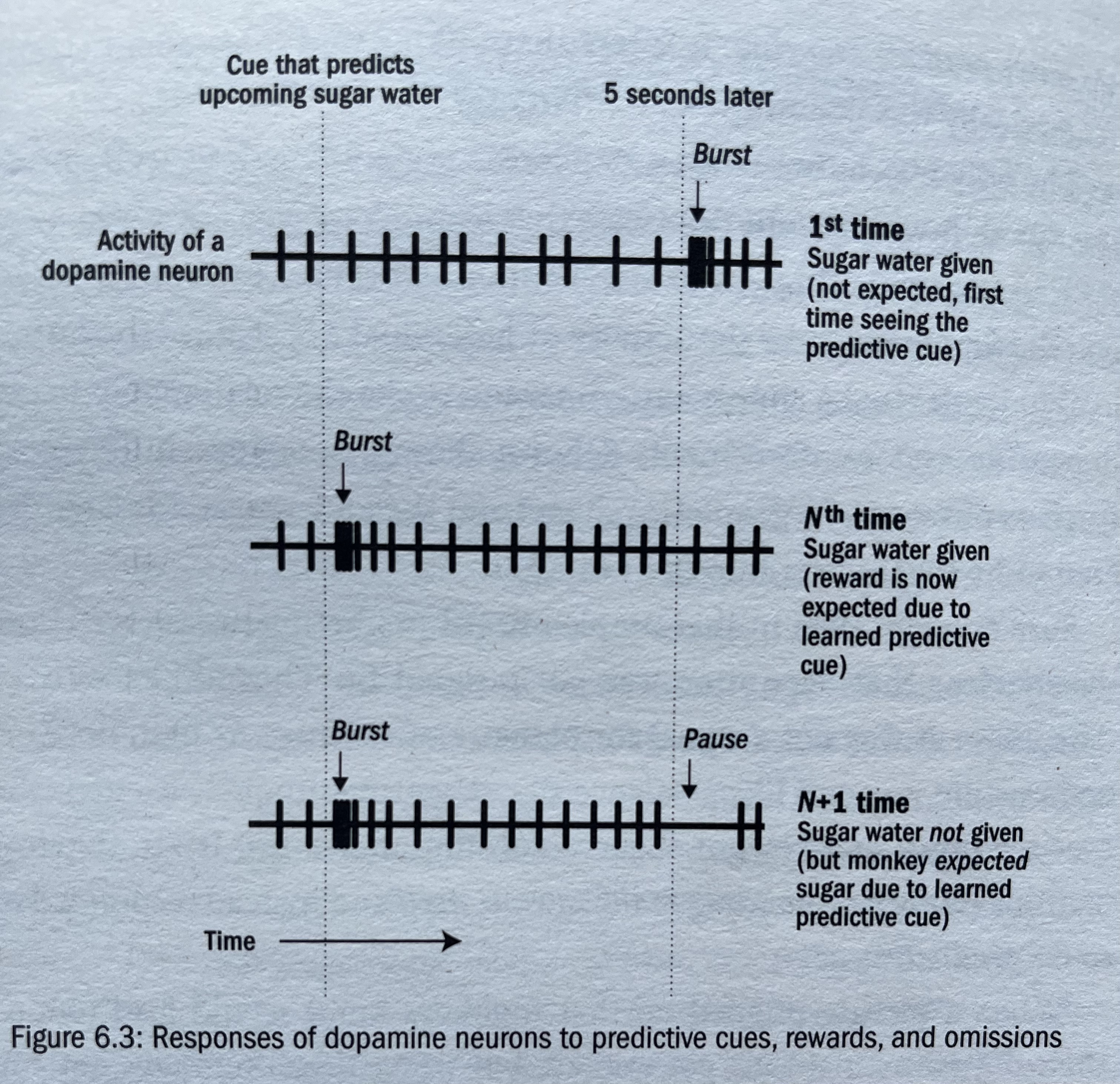
Original finding - Wolfram Schultz.
This signaling of both positive and negative reward prediction errors signaled by increases or decreases in the baseline firing rate of dopamine neurons. underlies disappointment and relief. Being able to learn from omissions of rewards and punishments is unique to the vertebrate brain. This also necessitates a sense of time and precise timing, perhaps absent in nematodes.
Dopamine drives behavior through many mechanisms, an important one being through the basal ganglia. The basal ganglia is chronically inhibiting the motor system but disinhibits selectively to drive movement, analogous to the actor in an actor-critic system. The dopamine system is itself driven by the hypothalamus (direct rewards) and feedback connections from the basal ganglia (hypothesized to be the critic signal for RPEs).